Get Online consultation with 3 Easy Process
- Pay Consultation Fee (RS.1000) by using QR Code
- Send payment screenshot on whats app: +91 9910873175
- After Verifying Your Payment, We Will connect you with doctor


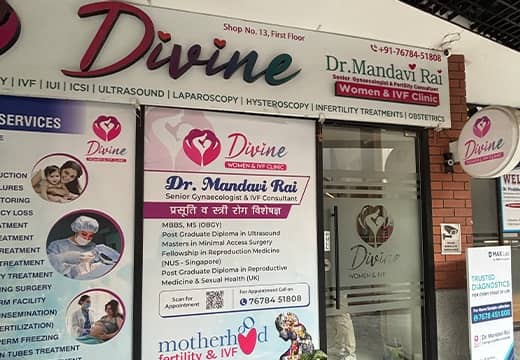
For many couples, the journey to parenthood can come with unexpected challenges. At Divine Women & IVF Clinic, we are committed to providing expert fertility care with compassion, transparency, and personalised attention. Recognised as the best IVF centre in Noida, the clinic offers a comprehensive range of fertility treatments, including IVF, IUI, ICSI, egg freezing, and advanced reproductive care. With a patient-first approach, modern fertility technology, and a strong focus on clinical excellence, Divine Women & IVF Clinic supports individuals and couples at every stage of their fertility journey, helping them make informed decisions with confidence and hope.
Dr. Mandavi Rai is a leading fertility specialist and the best gynecologist in Noida with over 15 years of clinical experience and more than a decade dedicated to reproductive medicine. She has helped 3,000+ couples with their fertility challenges through personalised, evidence-based care.
Her qualifications include an M.S. in Obstetrics and Gynaecology, a Fellowship in Reproductive Medicine from the National University Health System, Singapore, and a Postgraduate Diploma in Sexual Health and Reproductive Medicine from the University of South Wales, UK. She is also a Gold Medalist in Minimal Access Surgery and a Fellow of the Indian College of Obstetricians and Gynaecologists (FICOG).
Over the years, Dr. Mandavi Rai has managed more than 3,000 IVF cycles, supported over 10,000 families, and achieved a reported success rate of up to 90% across fertility treatments. Her expertise spans IVF, IUI, ICSI, PCOS-related infertility, and complex reproductive conditions, ensuring every patient receives care tailored to their unique fertility journey.

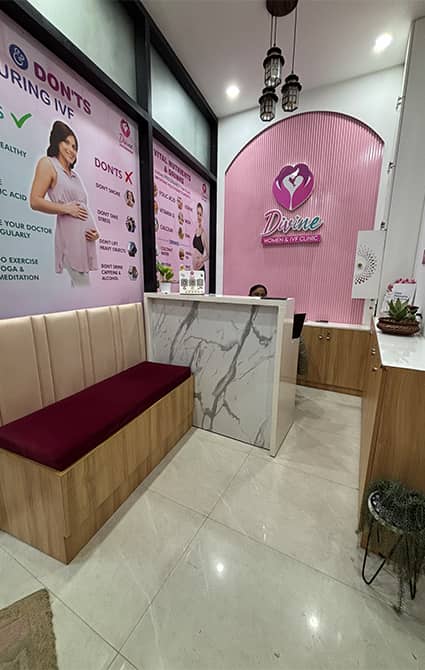
We create a welcoming environment where every patient feels heard, supported, and cared for throughout treatment.
Led by highly qualified and the best IVF doctor in Noida, with extensive experience in managing simple and complex fertility cases.
Modern IVF laboratories and advanced reproductive technologies support accurate diagnosis and effective treatment outcomes.
Our experienced nurses provide continuous guidance, personalised attention, and compassionate support at every stage.
Our fertility clinic in Noida offers 24/7 emergency support to ensure prompt medical attention whenever unexpected concerns arise during treatment.
Every treatment plan is tailored to individual fertility needs, medical history, and long-term family goals.
From consultation to pregnancy care, our team remains committed to providing clear guidance and reassurance.
At our fertility centre, we offer advanced infertility treatment in Noida for couples facing challenges in conceiving naturally. Since every fertility journey is unique, our approach begins with a detailed evaluation to identify the underlying cause and recommend the most suitable treatment plan.
So, if you are dealing with unexplained infertility, PCOS, ovulation disorders, endometriosis, male factor infertility, or recurrent pregnancy loss, we provide personalised fertility care supported by advanced reproductive technologies.
Advanced assisted reproductive technology for couples requiring specialised fertility treatment and enhanced conception opportunities.
A minimally invasive fertility procedure that improves the chances of conception in selected cases of infertility.
A specialised IVF technique where a single healthy sperm is injected directly into the egg to support fertilisation.
Comprehensive treatment plans to regulate ovulation, improve reproductive health, and support natural conception.
Advanced diagnostic testing and treatment options for sperm-related fertility concerns.
Detailed fertility assessments to identify underlying causes and create the most effective treatment strategy.

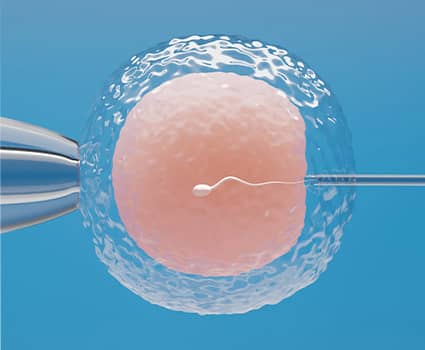
IVF stands for in vitro fertilisation. It’s one of the more widely known types of assisted reproductive technology (ART). IVF works by using a combination of medicines and surgical procedures to help sperm fertilise an egg, and help the fertilised egg implant in your uterus.
IVF has many steps, and it takes several months to complete the whole process. It sometimes works on the first try, but many people need more than 1 round of IVF to get pregnant. IVF definitely increases your chances of pregnancy if you’re having fertility problems, but there’s no guarantee, everyone’s body is different, and IVF won’t work for everyone.
People choose IVF for many reasons, including infertility issues or when one partner has an existing health condition. Seeking care at the best IVF centre in Noida can help address these concerns with advanced medical support. Some people try IVF after other fertility methods have failed or if they’re at an advanced maternal age. IVF is also a reproductive option for same-sex couples or people who wish to have a baby without a partner.
IVF is an option if you or your partner has:

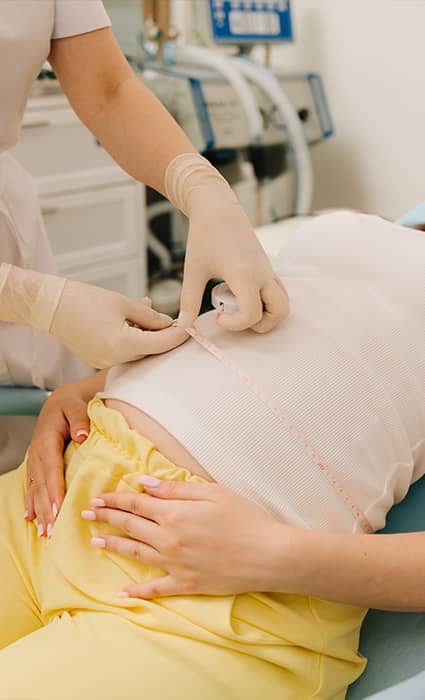
IVF can be broken down into the following steps:
During each natural cycle in a healthy person of reproductive age, a group of eggs begins to mature each month. Typically, only one egg becomes mature enough to ovulate. The remaining immature eggs in that group disintegrate.
During your IVF cycle, you’ll take injectable hormone medications to encourage the entire group of that cycle’s eggs to mature simultaneously and fully. This means, instead of having just one egg (like in a natural cycle), you may have many eggs. The type, dosage and frequency of medications prescribed will be tailored to you as an individual based on your medical history, age, AMH (anti-mullerian hormone) level and your response to ovarian stimulation during previous IVF cycles. For this procedure, guidance from an experienced IVF specialist in Noida helps ensure personalised stimulation planning.
The other steps in the ovarian stimulation process include:
Monitoring: Your ovaries’ response to the medications is monitored by ultrasound and blood hormone levels. Monitoring can occur daily or every few days over two weeks. Most stimulations last between eight and 14 days. At monitoring appointments, healthcare providers use an ultrasound to look at your uterus and ovaries. The eggs themselves are too small to be visible with an ultrasound. But your healthcare providers will measure the size and number of growing ovarian follicles. Follicles are little sacs within your ovaries that should each contain a single egg. The size of each follicle indicates the maturity of the egg it contains. Most follicles greater than 14 millimetres (mm) contain a mature egg. The eggs contained within follicles less than 14 mm are more likely to be immature and won’t fertilise. This stage may also influence the overall IVF treatment cost.
Trigger shot: When your eggs are ready for final maturation (determined by your ultrasound and hormone levels), a “trigger shot” is given to finalise the maturation of your eggs in preparation for egg retrieval. You’ll be instructed to administer the trigger shot exactly 36 hours before your scheduled egg retrieval time. These medications can impact the total IVF cost.
The afternoon after your egg retrieval procedure, the embryologist will try to fertilise all mature eggs using intracytoplasmic sperm injection, or ICSI. This means that sperm will be injected into each mature egg. Immature eggs cannot have ICSI performed on them. The immature eggs will be placed in a dish with sperm and nutrients. Immature eggs rarely finish their maturation process in the dish. If an immature egg does mature, the sperm in the dish can then attempt to fertilise the egg.
On average, 70% of mature eggs will fertilise. For example, if 10 mature eggs are retrieved, about seven will fertilise. If successful, the fertilised egg will become an embryo.
If there is an exceedingly large number of eggs or you don’t want all eggs fertilised, some eggs may be frozen before fertilisation for future use. This stage is carefully managed at the best IVF centre in Noida.
Over the next five to six days, the development of your embryos will be carefully monitored.
Your embryo must overcome significant hurdles to become an embryo suitable for transfer to your uterus. On average, 50% of fertilised embryos progress to the blastocyst stage. This is the stage most suitable for transfer to your uterus. For example, if seven eggs were fertilised, three or four of them might develop to the blastocyst stage. The remaining 50% typically fail to progress and are discarded.
All embryos suitable for transfer will be frozen on day five or six of fertilisation to be used for future embryo transfers.


There are two kinds of embryo transfers: fresh embryo transfer and frozen embryo transfer. Your healthcare provider can discuss using fresh or frozen embryos with you and decide what’s best based on your unique situation. Both frozen and fresh embryo transfers follow the same transfer process. The main difference is implied by the name. The approach selected can affect the IVF treatment cost.
A fresh embryo transfer means your embryo is inserted into your uterus between three and seven days after the egg retrieval procedure. This embryo hasn’t been frozen and is “fresh.”
A frozen embryo transfer means that frozen embryos (from a previous IVF cycle or donor eggs) are thawed and inserted into your uterus. This is a more common practice for logistical reasons and because this method is more likely to result in a live birth. Frozen embryo transfers can occur years after egg retrieval and fertilisation.
As part of the first step in a frozen embryo transfer, you’ll take oral, injectable, vaginal or transdermal hormones to prepare your uterus for accepting an embryo. Usually, this is 14 to 21 days of oral medication followed by six days of injections. Typically, you’ll have two or three appointments during this time to monitor the readiness of your uterus with an ultrasound and to measure your hormone levels with a blood test. When your uterus is ready, you’ll be scheduled for the embryo transfer procedure. These preparations contribute to the overall IVF cost.
The process is similar if you’re using fresh embryos, except embryo transfer happens within three to five days of being retrieved.
The embryo transfer is a simple procedure that doesn’t require anaesthesia. It feels similar to a pelvic exam or Pap smear. A speculum is placed within the vagina, and a thin catheter is inserted through the cervix into the uterus. A syringe attached to the other end of the catheter contains one or more embryos. The embryos are injected into the uterus through the catheter. The procedure typically takes less than 10 minutes. Many patients undergo this step at a reputed IVF clinic in Noida.
Pregnancy occurs when the embryo implants itself into the lining of your uterus. Your healthcare provider will use a blood test to determine if you’re pregnant approximately nine to 14 days after embryo transfer. Pregnancy outcomes are closely monitored at the best IVF centre in Noida.
The IVF cost in Noida typically ranges from ₹1,00,000 to ₹2,50,000 per cycle, depending on individual fertility conditions, medications, laboratory procedures, and treatment requirements. At our IVF clinic in Noida, we believe in complete transparency, ensuring couples understand every aspect of their treatment plan and associated costs before beginning their fertility journey.
Book a consultation with Dr. Mandavi Rai to receive a personalised treatment plan and detailed cost estimate tailored to your fertility needs.


There are several risks associated with IVF treatment:
Data collected in the U.S. is measured per egg retrieval, not per cycle. The average percentage of live births per egg retrieval in 2019 was:
IVF treatments can fail for many reasons and at any step in the IVF process. Some reasons an IVF cycle fails are:
Your healthcare provider will be able to examine each step of the process with you and determine how to best move forward with future treatments.

It’s not entirely known if IVF alone is responsible for birth defects. For non-IVF pregnancies, around 2% of all children will be born with a birth defect. Some studies show a slightly higher risk for babies born through IVF. This could be due to delayed conception or related to the underlying cause of infertility. Understanding risk and IVF treatment cost helps patients make informed decisions.
We invite you to take the first step toward fulfilling your dreams of parenthood by partnering with our renowned Best IVF Centre in Noida at Divine Women and IVF Clinic Noida with Dr. Mandavi Rai. Our compassionate team is here to provide unwavering support, innovative solutions, and expert care throughout your fertility journey. Our IVF clinic in Noida ensures expert care and emotional support throughout treatment. Contact us today to schedule a consultation and embark on a pathway to parenthood that is backed by excellence, compassion, and success. Your future family is waiting, and we’re here to help you make it a reality.
1. Which Is the Best IVF Centre in Noida?
When choosing an IVF centre, it’s important to look for experienced specialists, personalised treatment, and compassionate support throughout your journey. Divine Women & IVF Clinic is a trusted choice for many couples in Noida, offering advanced fertility treatments, patient-focused care, and guidance at every step towards parenthood.
2. What is the IVF cost?
The cost of IVF treatment in Noida typically ranges between ₹1,00,000 and ₹2,50,000 per cycle. The final cost may vary depending on:
3. When should I consult a fertility specialist?
If you have been trying to conceive for over a year without success, it is advisable to seek professional advice. Women over 35 should consider consulting a specialist after six months.
4. What is the difference between IVF and IUI treatment?
IUI involves placing prepared sperm directly into the uterus, whereas IVF fertilises eggs outside the body before embryo transfer.
5. How many IVF cycles are usually required?
Some couples achieve pregnancy during their first cycle, while others may require additional treatment cycles depending on individual circumstances.
6. Can IVF help after repeated IVF failure?
Yes. Advanced fertility testing, embryo assessment, and personalised treatment protocols can help improve outcomes after previous unsuccessful IVF cycles.
7. What tests are carried out before fertility treatment begins?
Investigations may include hormone assessments, ultrasound scans, ovarian reserve testing, semen analysis, and other fertility-related examinations.
8. Is IVF successful after the age of 40?
Yes, pregnancy through IVF is possible after 40, although success rates generally decline with age due to reduced egg quality and ovarian reserve. A fertility assessment can help determine the most suitable treatment options.
9. What is the minimum AMH required for IVF?
There is no strict minimum AMH level for IVF. Even women with very low AMH may be candidates for treatment after a detailed fertility assessment.
10. Should I freeze embryos or opt for a fresh embryo transfer?
The choice depends on your age, hormone levels, uterine health, and treatment response. Your fertility specialist will recommend the most suitable approach.
11. Can women with PCOS get pregnant through IVF?
Polycystic Ovary Syndrome (PCOS) can make it difficult to conceive naturally because it often affects regular ovulation. However, many women with PCOS successfully achieve pregnancy through IVF. With the right treatment plan, careful monitoring, and personalised fertility care, IVF can greatly improve your chances of having a healthy pregnancy.
 Book An Appointment