Get Online consultation with 3 Easy Process
- Pay Consultation Fee (RS.1000) by using QR Code
- Send payment screenshot on whats app: +91 9910873175
- After Verifying Your Payment, We Will connect you with doctor

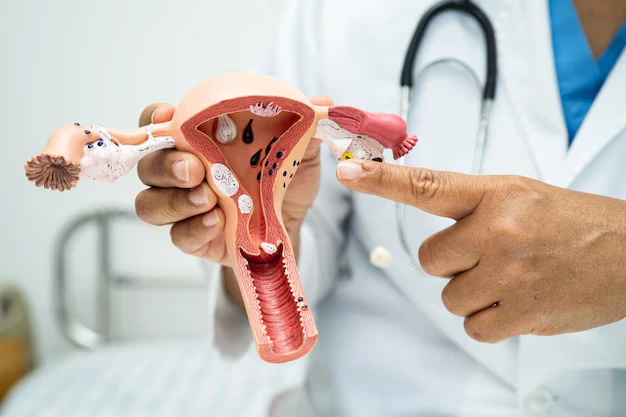
The polyps of the uterus are often noted as tiny polyps, tiny, benign developments on the inner wall of the uterus. While they are usually non-cancerous, they can affect fertility, cause irregular bleeding, or other gynecological issues. The most effective treatment for this growth is hysteroscopic polyp removal, a minimally invasive process that restores uterine health and improves natural conception or IVF success.
Dr. Mandvi Rai, IVF expert
Women receive specialist care to diagnose and treat polyps through advanced hysteroscopic processes, ensuring safety, accuracy, and rapid recovery.
The uterus polyps are tiny overgrowths of the endometrial lining internal the uterus. They vary in size, from a few millimeters (small polyps) to several centimeters. While some women experience no symptoms, others may face complications such as infertility or abnormal bleeding.
Common symptoms of uterine polyps:
If you perceive any of these signs, it is important to consult a reproductive expert for a timely diagnosis and solution.
Even tiny polyps can interfere with fertility and fetal implantation during IVF. They can also cause hormonal inequality or disturb the natural uterine environment. By removing them, the uterus is restored to a healthy state. This improves both reproductive results and overall comfort.
Hysteroscopic polyps removal: Process Hysteroscopy is a minimally invasive technique that allows the doctor to look and treat inside the uterus using a thin, light equipment called a hysteroscope.
Step-by-step process:
Diagnosis: A pelvic ultrasound or hysteroscopy confirms the presence of polyps.
Anesthesia: Local or general anesthesia can be used depending on the case.
Polyp elimination: A hysteroscope is inserted into the uterus via the vagina and cervix. where tiny surgical equipment removes polyps with accuracy.
Minimum recovery time: Since no incision is made. The process is safe, and recovery is quick.
This surgery usually takes 20–30 minutes, and most patients can come back home on the same day.
Improve fertility: The chances of a natural pregnancy and the IVF success rate increase.
Help from symptoms: reduces abnormal bleeding and pain
Secure and least invasive: No outer cuts or stitches required.
Fast recovery: Most women restart daily activities within 1-2 days.
Accurate diagnosis: The direct view of the uterine cavity allows.
The recovery is usually smooth and sharp. Light cramps or light spotting can be for one or two days. Doctors often recommend avoiding heavy exercise and sexual activity for a week. A follow-up consultation ensures proper treatment and examination for recurrence.
Hysteroscopic polyp removal is a highly effective solution for women struggling with small uterine polyps, irregular bleeding, or infertility. The process not only restores the health of the uterus but also increases the possibility of conception, whether naturally or through IVF.
For specialist help, safe methods, and personal reproductive care. Consult Dr. Mandavi Rai, a reliable IVF specialist doctor in Noida dedicated to helping women to help go-getter their dreams of maternity.
 Book An Appointment