Get Online consultation with 3 Easy Process
- Pay Consultation Fee (RS.1000) by using QR Code
- Send payment screenshot on whats app: +91 9910873175
- After Verifying Your Payment, We Will connect you with doctor

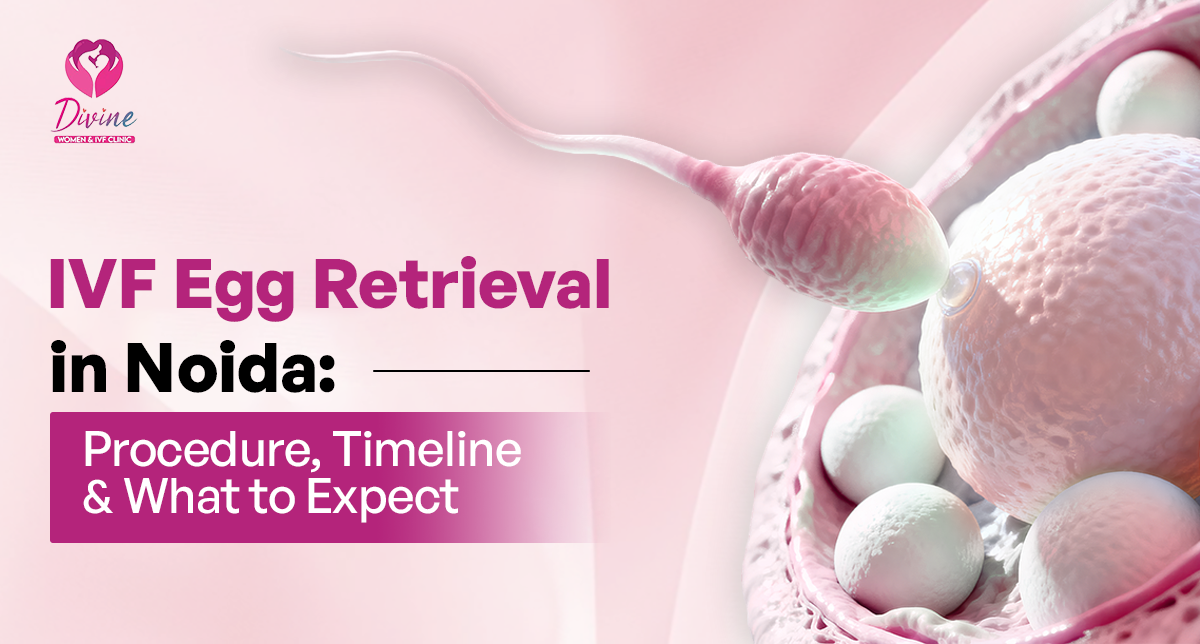
Table of Contents
IVF treatment often begins with clear plans of blood tests, scans, medication schedules, and appointments. Everything follows a pathway until one stage suddenly feels less predictable: egg retrieval.
This is usually the point where practical questions start building. What exactly happens during the procedure? How long will recovery take?
According to the Human Fertilisation and Embryology Authority (HFEA), more than 52,000 IVF cycles are carried out annually. Yet, fertility clinics report that egg retrieval remains one of the least understood stages before patients experience it themselves.
The uncertainty does not come from medical complexity but from the limited explanation of what your body is actually doing during this phase.
During a natural menstrual cycle, the body releases one egg. IVF changes this by encouraging several eggs to mature at the same time using hormone medication. Why? Having multiple eggs increases the chances of creating healthy embryos.
At Divine Women & IVF Clinic in Noida, IVF egg retrieval is the step where doctors collect these mature eggs before ovulation occurs naturally.
Think of it this way: your ovaries have already done the hard work of growing follicles. The clinic simply collects them at the right moment so fertilisation can happen under controlled laboratory conditions.
Many patients often ask, “Are eggs taken from inside the ovary through surgery?” The answer is not exactly. The procedure uses ultrasound guidance and a very fine needle, meaning there are no cuts, stitches, or external wounds.
At a fertility clinic in Noida, preparation before egg retrieval is carefully personalised rather than routine.
Dr. Mandavi Rai is a fertility specialist in Noida, with over 15 years of experience in reproductive medicine and gynecological care, follows a step-by-step monitoring approach to ensure your body is responding optimally before the procedure.
In her clinical practice, this stage is crucial for maximising egg quality and improving IVF outcomes. In the days leading up to retrieval, you will have frequent visits that help guide treatment decisions in real time.
For example, if follicles grow unevenly, doctors may slightly extend stimulation to allow smaller follicles to mature. This personalised timing is why IVF today feels more controlled than older treatment methods.
When follicles reach the ideal size, you receive a trigger injection. This injection tells the eggs to complete their final maturation phase. Retrieval is then scheduled about 36 hours later, before ovulation occurs naturally.
“Also Read”- Is Egg Retrieval Painful in IVF?
Naturally, many patients in Noida imagine an operating theatre experience before undergoing this treatment. Patients undergoing egg retrieval in Noida often ask is egg retrieval painful in IVF? In reality, the process is structured and surprisingly quick.
You arrive at our clinic in Noida having fasted for a few hours. A nurse prepares you, explains each step again, and answers last-minute questions. After that, light sedation is given so you feel relaxed and sleepy rather than fully unconscious.
During the procedure:
The procedure under the best IVF doctor in Noida usually lasts 15–25 minutes. By the time you wake, the collection is already complete.
| Stage | What Happens | How It Feels for You |
| Ovarian Stimulation | Daily hormone injections grow multiple follicles | Mild bloating, regular monitoring visits |
| Monitoring Phase | Scans and blood tests guide treatment adjustments | Reassurance through close supervision |
| Trigger Injection | Final egg maturation step | Precise timing instructions |
| Egg Retrieval | Eggs collected under sedation | The procedure feels quick and controlled |
| Recovery | Rest and observation | Period-like cramps, manageable fatigue |
| Fertilisation | Eggs meet sperm in the lab | Waiting for embryo updates |
Emotionally, this stage feels different from everything that came before. Until now, IVF may have felt like scans, medications, and schedules. Couples exploring IVF treatment in Noida often have the most questions about the egg retrieval stage because it is one of the most important steps before fertilisation and embryo development.
Once you understand the process, IVF egg retrieval stops feeling like an unknown medical event and starts making logical sense. When you are properly informed, and each stage is explained clearly, IVF becomes less overwhelming and far more manageable.
If you are living in Noida and preparing for IVF or considering fertility treatment in Noida, speaking with an experienced specialist can make a significant difference in how confidently you move through each step.
At Dr. Mandavi Rai, we focus on personalised fertility care and stimulation planning to egg retrieval in Noida. Our process is clear, so you understand not only what is happening, but also why it matters for your treatment outcome.
Looking for IVF treatment in Noida or egg retrieval guidance in Noida? Consult Dr. Mandavi Rai at Divine Women & IVF Clinic for personalised fertility care and IVF treatment planning. Call +91 7678451808 to book your consultation.
Most patients feel mild cramping similar to period discomfort rather than significant pain.
The procedure usually takes 15 to 25 minutes, followed by a short recovery time.
Numbers vary, but many cycles collect between 8 to 15 mature eggs, depending on ovarian response.
The cost of IVF egg retrieval in Noida can vary depending on the clinic, medications, and treatment plan. In most cases, egg retrieval is included as part of the overall IVF package.
Yes, egg retrieval is generally considered a safe and routine IVF procedure when performed by experienced fertility specialists using ultrasound-guided techniques and sedation.
Most patients require multiple monitoring visits during ovarian stimulation, including ultrasounds and hormone tests, before the final egg retrieval procedure is scheduled.
 Book An Appointment
[…] Egg retrieval is often perceived as the most uncomfortable stage, leading many couples to delay decision-making despite it being a well-controlled medical procedure. […]
[…] Also Read: IVF Egg Retrieval in Noida: Procedure, Timeline & What to Expect […]
[…] and diminished ovarian reserve often contribute to this issue. Understanding what happens during IVF egg retrieval can help you prepare better for stimulation and […]
[…] Also Read: IVF Egg Retrieval in Noida: Procedure, Timeline & What to Expect […]